

Armorik: Brittany meets Andalusia
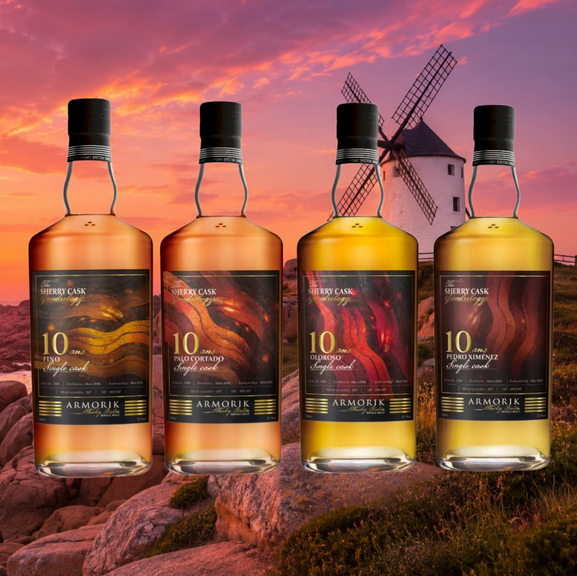
In the world of whisky, there are ranges that simply line up bottles. And then there are those that tell a story.
Armorik’s Sherry Cask Quadrilogy does not seek to impress with age or rarity — even though 367 bottles per cask already command respect.
No. This Breton quadrilogy seeks to answer a far more interesting question: What becomes of Armorican whisky when it is allowed to interact with four different styles of sherry?
The origins of the project: an obsession called sherry
At Warenghem, sherry is not a passing fad, but a core principle.
David Roussier has been exploring it for years: understanding, comparing, isolating. Going beyond a simple ‘finish’ to enter into an almost experimental approach, as evidenced by his ARMORIK SHERRY CASK or the multi-award-winning ARMORIK DOUBLE MATURATION (to name but a few...).
With this quadrilogy, the project becomes crystal clear: take the same distillate, the same ageing period (10 years), and subject it to four types of sherry casks for full maturation.
Four expressions of the wood and four interpretations of time.
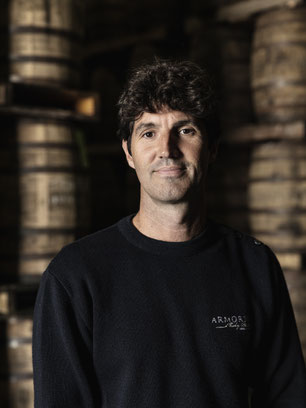
And at the heart of it all, Erwan Lefebvre. Not as a blender this time… but as a keen observer of a phenomenon. Four single casks at 46% ABV.
From Jerez to Lannion: memories of the casks
Ten years ago, somewhere in the heat of Andalusia, four casks (containing something other than whisky) were sealed and stacked in a solera system at a sherry producer’s premises. And anyone familiar with sherry knows that each type is different and offers a distinct character, taste and flavour.
It’s easy to imagine these casks leaving a silent bodega, still laden with wine, heat and slow oxidation, crossing Europe, changing climate as they move from dry to humid conditions, and finally beginning a second life in Brittany.
For that is where everything changes. The same cask no longer reacts in the same way: the salt in the air, the coolness, the temperature fluctuations… everything rewrites the score.
An idea from Brittany:
How do four different sherry casks fare in a Celtic terroir? This is the experiment that the Warenghem distillery invites us to discover. As Erwan puts it: ‘By presenting these four expressions side by side, we are offering enthusiasts a unique educational and indulgent experience…’.
Armorik’s Sherry Cask Quadrilogy Tasting
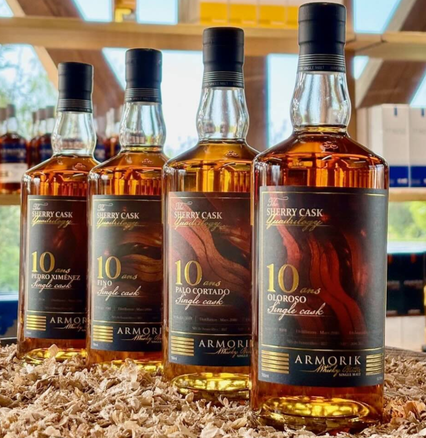
FINO — The freshness of the sea
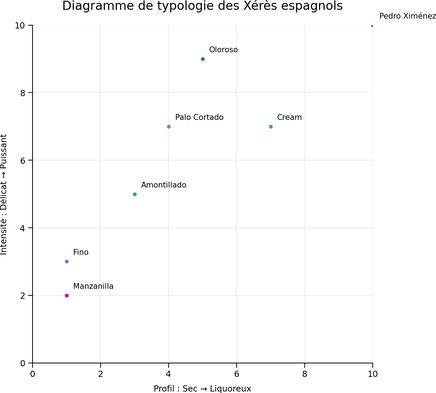
A sherry that’s light on the palate yet elevates the experience! Generally speaking, it can be described as a very dry, light and maritime sherry, characterised by freshness, hints of almond and a delicate, salty finish. Perhaps the most suitable for the Breton climate?
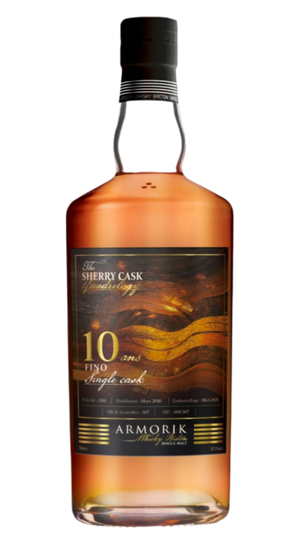
The nose of this expression is delicate and refined. The first thing you notice is a scent of fresh almonds. This is followed by a very subtle hint of green apple sweetness blended with gentle spices that tickle the nose without being overpowering.
These spices remain present and take on a salty, iodine-like quality.
On the palate, the attack is smooth, very slightly sweet and rather bready, with a distinct barley flavour. However, this sensation does not linger, and the spices arrive in force with peppery notes on the palate. Subsequently, the iodine-like sensation lends it a pronounced chalky minerality. The journey concludes, however, with softened notes of hazelnut.
The finish is long, dry yet elegant. It reveals a return to the saltiness and a slight lemony bitterness.
PALO CORTADO — The elusive balance
The most intriguing of the four, neither completely dry nor truly rich, but above all the rarest, combining the aromatic finesse of finos with the structured richness of olorosos.
Did you know that Palo Cortado isn’t a person, but that the name of this wine comes from an old Andalusian practice? Indeed, originally, cellar masters would mark the barrels with a line (“palo”) to indicate their development. When a wine developed in an unexpected way, the line was “cut” (cortado) → hence the name palo cortado.
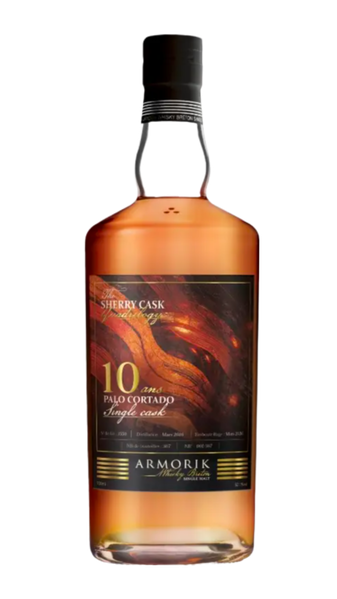
The difference on the nose is striking: it reveals soft, indulgent and sweet notes. One detects Andalusian orange peel and hints of milk chocolate. The spices are very light and subtle, and are then enveloped first by notes of mandarin and then by those of honey in a wooden jar.
The palate is equally indulgent and rounded. Notes of caramel and dried fruit with a slight hint of spice that do not linger on the palate. Indeed, they give way to gently sweet notes and a velvety sensation in the mouth.
Surprisingly, the first sensation, once swallowed, is salty and lemony, but this does not last and is followed by toasty, warm notes.
OLOROSO — The Andalusian style
Here, the cask takes centre stage and confirms why Oloroso is a staple in the world of single malt whisky. This powerful, well-structured sherry, with its deep notes of nuts, spices and leather, typically expresses the oxidative maturation process to the full.
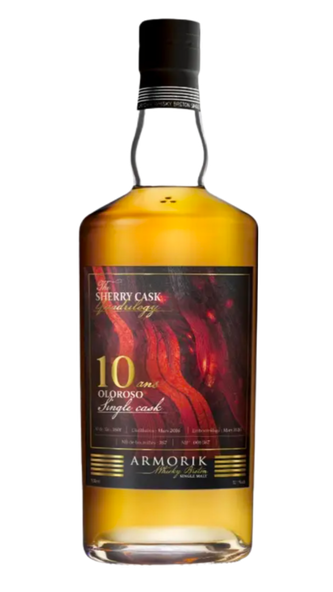
As one might expect, the nose is intense and deep, brimming with notes of leather, dried apricots still bursting with sweetness, nuts and cocoa. As is often the case with Oloroso-matured whiskies, this is a whisky as rich and indulgent as the Oloroso is dry, and above all, it offers a lovely warmth that you never want to leave. There are hints of spice, but none of it is harsh. Similarly, there is a subtle salty undertone.
The palate is rich and indulgent, filling every corner of the mouth with notes of currants and dried figs. The spices lend a very slight edge that rouses us from our drowsiness, only to guide us towards toasty notes.
The finish is long, enveloping and warm. A true signature of sherry.
PEDRO XIMÉNEZ — A gourmet delight
The most expressive, but also the most dangerous if not handled properly. ‘Pedro’s Sherry’ is intensely sweet, rich and smooth, dominated by aromas of dried fruit, chocolate and coffee.
By the way, did you know that, according to legend, Peter Siemens (Pedro Ximén in Spanish) was a Spanish (or German) soldier (or monk) and that it was he who is said to have introduced this grape variety to Andalusia in the 16th century (but nothing is certain – it’s close to an Andalusian legend in any case; peatdream wasn’t there!).
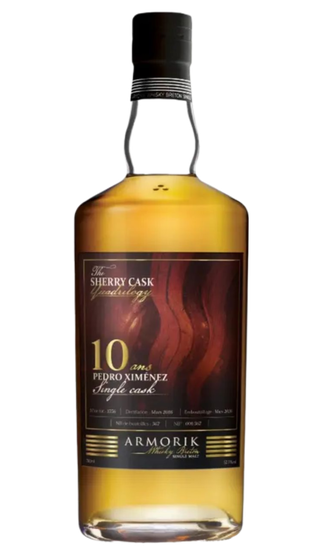
On the nose, it’s a veritable explosion of rich flavours, with notes of candied grapes, dates and even molasses. We were looking for sweetness, and the least we can say is that this whisky has plenty of it. There are also notes of mandarin and dark chocolate against a backdrop of spices.
The palate is quite smooth and richly textured; it’s almost like a very slightly salty black fruit cream. You’ll then, of course, discover spicy notes of pepper, but also woody notes quite similar to those of a roasted cocoa bean.
The finish here is very long, with notes of chocolate against a backdrop of gentle spices and a slight freshness.
What this four-part series is really about
It shows that Breton whisky – and French whisky in general – have taken on a whole new dimension.
The Warenghem distillery no longer seeks to prove its existence (it has been around since 1987, after all) but is now exploring new horizons. She also explains that the cask is not merely a container: it acts as a bridge between Andalusia and Brittany, between heat and humidity, between wine and spirits.
Four ways of telling the same story.
And when it comes to choosing a favourite… one realises that perhaps that is not the point: certainly, here we have a choice between originality for the Fino, finesse for the Palo Cortado and indulgence for the Oloroso and the PX.
For this quartet is not meant for choosing. It is meant for comparing, for savouring, for travelling.
And above all, to remind us of one simple thing: the taste of whisky always begins… where the wood lived before it.
